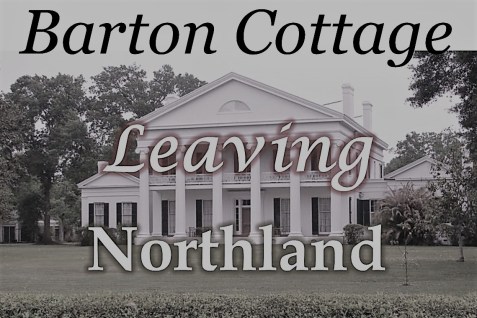
Barton Cottage Chapter 1 by A.P. Maddox

Barton Pic 1 copy 2

Barton Cottage  By  A.P. Maddox

© A.P. Maddox 2017

Barton Cottage is an adaptation of one of Jane Austen’s most beautiful and beloved classics—Sense and Sensibility—reimagined and set in the picturesque Piedmont of modern-day North Carolina. Follow Caroline & Ashelynn Hathcock as they leave their family home, lose their hearts and navigate their way through life’s challenges. 

A few of you may remember this story originally published a few years back under a different title by this author. Contract canceled by the author, it has been reworked and retitled to be shared here. 

Barton Cottage will be posted on the Little CAB Press blog—one chapter at a time—in 28 parts, from now until December 21, the end of which culminates in the Christmas season!  

(YA/NA fiction/romance, Reading level: grade 7, Words: 2262)


Volume 1 Leaving Northland

Chapter 1 The Hathcock Family

Tears filled the Hathcock sisters eyes as they watched their father’s casket being lowered into the ground.

Eighteen-year-old Ashelynn held tightly to their mother’s right arm as Maggie, eleven, clung to her left. Maggie’s sobs grew louder the lower the casket went. Caroline, the oldest at twenty, stooped, pulling Maggie into a hug so her mother could wipe the tears streaming down her own face.

Their older, half-brother, Frank, shoveled some dirt onto the casket, and put his arm around his stepmother, guiding her to the waiting car. Frank wasn’t usually so attentive, but on this occasion, he couldn’t reasonably refrain.

The limo ride home started out solemnly. Maggie, sat next to her mother, facing Frank and her older sisters. She stared out the window, tears rolling down her cheeks, using her palms to wipe tears away. Finally stomping her feet on the floor, she burst out, “I hate you, Frank!”

Frank, was taken aback by the outburst. He glanced at his stepmother and other two sisters with a puzzled stare before looking back at Maggie to plead, “Whatever for? What did I do?”

Scarcely before his inquiry could be muttered out, Maggie was out of her seat, banging on Frank’s chest and shouting through sobs, “Now that Father is gone, you’re going to take our home away and kick us out without anywhere to go. I know you are!”

Caroline and Ashelynn—seated on either side of Frank—grabbed Maggie’s arms attempting to stop her while Mrs. Hathcock wrapped her arms around Maggie’s waist, pulled her back into her seat and called for Maggie to calm herself.

“Dearest little sister,” Frank said, straightening his tie. “I could never kick any of you out! Northland is still your home. I’m not even planning to move my family there; we will continue to live in our own home.”

Frank was a tall, slender, attorney, who owned a successful law firm in Charlotte. He and his wife, Dottie, had an elegant home there, which had proudly graced many local magazines and society pages.

“But I heard people say everything belongs to you now and we get nothing,” Maggie said between sniffles.

“Yes,” Frank went on, defensively explaining, “Father was only the trustee of the Northland Estate. Grand Uncle James made it clear in the will that upon Father’s passing, I was to become the sole heir.” He paused, looking at Maggie’s face, wet with tears. Through a softened gaze and a more tender voice he continued, “However, I could never displace my sisters. You must all continue to think of Northland as your home.”


Their father, Thomas Hathcock and his family came to live at Northland when the children were young. Thomas’s elderly uncle, James Hathcock had decided to take a less active role in the family business. And since James was a bachelor and did not want to be alone in his later years, he invited Thomas and his family to come live with him. Thomas had been working at his uncle’s side for years, so moving in and taking over care of the home was an easy transition.

Once the family moved in, James came to love his grandnephew Frank and grandnieces, like he might have loved his own grandchildren, if he’d had any. And they in return came to love him like a grandfather.

The years went by and as Grand Uncle James became older and bedridden, he appointed Thomas as the trustee of the estate with the condition that upon Thomas’s death, Frank, the only male heir, would inherit everything—keeping the estate in the Hathcock name as it had been for over one hundred fifty years.

The grand Northland home was a Greek-revival-style antebellum house situated on the western outskirts of Asheville, North Carolina. Six grand columns graced the front of the white two-story home. Over its one hundred fifty-year history it had been remodeled and modernized as it passed from one generation to the next until it fell into the hands of James Hathcock, who did not make many more updates or improvements upon what he believed was an already grand-enough home. “Northland has electricity, phone jacks, and hot and cold running water—and that is all the modernizing she needs,” Uncle James would say.


The limo turned down the long drive leading to Northland. Majestic oak trees lined the way, creating an archway of outstretched branches and hanging moss. Near the end of the drive was a large front lawn surrounded by a circular driveway, offering a full view of the front of the house.

A catered luncheon was held in the garden for the funeral guests. Maggie sat on a brick half-wall lining the edge of a flower bed at the far end. She and her father had a tradition of planting flowers each spring. She touched the delicate new blossoms and remembered planting these flowers just one month earlier as her ailing father watched from his wheelchair. She wondered who would plant flowers with her now that Father was gone.

Caroline and Ashelynn stood with their mother and brother near an archway leading to the garden while guests filed past to offer their condolences.

Mrs. Hathcock’s eyes misted as well-meaning friends and neighbors expressed how much they had always loved and would miss her departed husband.

Caroline listened to stories from guests about her father. She had heard many of them before, but some were new to her ears, and each brought comfort as they told of what a kind and generous man Thomas had been.

After greeting the guests Ashelynn turned quietly from the crowd and went inside. She made her way to the parlor to sit at the grand piano. It had been a birthday gift from Grand Uncle James; his encouragement of her talent had helped her become an accomplished pianist. She gently touched the keys and remembered how her father would sit in a chair nearby and listen to her play. He often said, “There are few greater joys in life than hearing you play.” She put her hands in her lap, bowing her head as tears fell.

After a little more than an hour, the guests departed, the caterers cleaned up, and the Hathcocks found themselves alone in mournful quiet for the remainder of the day.


In the evening, Caroline and Ashelynn found Maggie moping on a swing in the garden, her wavy brown hair covering a tear-stained face. They took a seat in the grass near the swing and Maggie wondered aloud, “Why didn’t Uncle James leave the house to us instead of Frank? Didn’t he love us?”

Caroline offered a sympathetic look and answered, “Of course he loved us. You mustn’t think otherwise. I suppose he was determined to keep everything in the Hathcock name, leaving Frank to inherit everything. I’m sure Uncle James figured we would all be grown and married by the time father passed and probably didn’t want any part of the business or estate being parted out to other families. He couldn’t have imagined Father would get cancer and pass away before we were grown and gone.”

“And I suspect,” Ashelynn interjected with a little bitterness, “it’s because four years ago Dottie gave birth to a son, whom they named James after Uncle James. Do you remember how much Uncle James doted on little James? He left everything to Frank for the sake of little James—another James Hathcock one day over the entire estate.”

“Yes,” Caroline said, nodding. “Uncle James spent countless hours with his namesake, watching him toddle around the garden, play with his toys in the parlor and reading to him in the library. It did seem Uncle James thought of little James as the son he never had.”

Maggie groaned regretfully. “I guess I never realized he loved little James more than us.”

“Oh, I don’t think we should look at it as though he loved little James more,” their mother said, approaching. “He loved us all.”

She brushed Maggie’s hair out of her face before continuing. “Now, before he died, your father told me there was a provision in the estate giving us each an allowance of five hundred dollars per month to live on, and he asked Frank to promise to help us with anything more we might need. I heard Frank agree to the promise, and since he has said we should continue to think of Northland as our home, I don’t think we have a thing to worry about!”

Her words and warm smile were encouraging. She changed the subject to sharing good memories of their father, and soon the mood had lifted, and all were smiling through bittersweet tears.

They returned to the parlor, where Mrs. Hathcock encouraged Ashlynn to sit at the piano and play their father’s favorite hymn, “Battle Hymn of the Republic”. The other girls sang along, as best they could through choked up emotion.

Mine eyes have seen the glory of the coming of the Lord;
He is trampling out the vintage where the grapes of wrath are stored;
He hath loosed the fateful lightning of His terrible swift sword:
His truth is marching on.
 

Glory, Glory, hallelujah!
Glory, glory, hallelujah!
His truth is marching on.

He has sounded forth the trumpet that shall never call retreat;
He is sifting out the hearts of men before His judgment-seat;
Oh, be swift, my soul, to answer Him! Be jubilant, my feet!
Our God is marching on. 

Glory, Glory, hallelujah!
Glory, glory, hallelujah!
His truth is marching on.

They bowed their heads and offered evening prayers. After saying “Amen” Caroline spoke up. “Do you remember that photograph we had taken of our family in front of the house two years ago?”

“The one before dad got sick?” Maggie asked.

“The one which offended Dottie because she, Frank and James weren’t in it?” Ashelynn said, with a scoffing laugh.

Caroline nodded. “Well, I painted it and had it framed.”

She stepped over and pulled something from behind the sofa. She removed the brown paper covering the painting to gasps from the others.

“It’s breathtaking,” their mother said, wiping a tear. “You must hang it over the fireplace.”

Caroline attended to hanging the painting, and the four women hugged and kissed each other’s cheeks before Mrs. Hathcock shooed her daughters off to bed.


Caroline had been studying at UNC Asheville on a partial art scholarship, which paid for art classes but not the generals. She would have been a sophomore by now but had taken a year off to help her mother care for her father while he was ill. She was a quiet—but not shy—person who usually kept her feelings to herself spending most of her time listening to others rather than asserting her own opinions.

Ashelynn was quite the opposite of Caroline and gave her opinions more readily, whether they were solicited or not. She would be graduating high school at the end of the current school year and would be joining Caroline at the college in the fall on a similar music performance scholarship.

If the Hathcock girls were regarded as beautiful—Caroline with brilliant blue eyes and sunlit blonde hair and Ashelynn with long auburn locks and Irish green eyes—one didn’t have to look far to know whence their beauty came. Their mother, Sarah Hathcock, was a gracefully beautiful and youthful looking woman. She was often mistaken as an older sister to her daughters—rather than their mother—which tickled her with delight on each occasion.


After the women retired to bed, Frank sat in the office downloading the financial files of the Northland Estate onto his laptop computer. Finding nothing dissatisfying, he happily mumbled, “Good, good.”

File after file, he marveled at the orderly way the finances were kept and the sound frugality of his late father’s business practices, which had helped the company weather many economic storms.

The Hathcock fortune had been built over a century and a half upon agriculture, textiles, and furniture.

“Let’s see,” he muttered, “the estate will grant my stepmother and sisters twenty-four thousand dollars a year for their care.”

Frank recalled the promise to his dying father, to take care of his stepmother and sisters. He pondered the amount and groaned. “That’s poverty level.” He sighed and reasoned. “But if they continue to live here they will not have to pay any rent, so twenty-four thousand a year should be sufficient for their necessities.”

He thought longer and grumbled. “But what of the girls’ educations? A proper education is costly and Father would want me to take care of those needs. Should I add to the amount?”

He continued to pore over the records. “It looks as though the estate should be able to part with double that amount to support the girls.”

Frank began to smile, pleased with his generosity. “Yes, it’s not an inconvenience to my family and it will make the girls completely comfortable. And what a surprise it will be to them!” He smiled, determined to fulfill the promise.

He sat back in his chair, put his feet on the desk and laced his fingers behind his head with a self-congratulatory grin. “I’ll drive to the office tomorrow, make it official on the books and surprise Mother and my sisters tomorrow night at dinner.”

Up next in Chapter 2: An unexpected guest descends on Northland like a tornado—upheaving and relocating everything in their wake.   

Posted in Barton Cottage | Tagged , , , , | 7 Comments

Weeds In The Flower Pot by Dianna Beamis Good

So proud to announce the publication of Weeds In The Flower Pot by Dianna Beamis Good!

Front Weeds In The Flower Part Cover

Have you ever wondered if other Christians have the same insecurities, doubt, loneness, hope, love, compassion and a need for connections like you do? Would you like to break the shackles of silence, scream to the tallest mountain that we are human and make mistakes – and it’s okay? Grab a few friends, make a pot of coffee or just sit alone with some words that may help you feel a little less alone with your weeds in the flowerpot of life.

Weeds in the Flower Pot is a guided devotional with journal pages to record your own thought and feelings

From Dianna—

Weeds in the Flower Pot is a book about life, everyone’s life. I am no expert on other’s thoughts, but I do believe we all share in the same insecurities, doubt, loneliness, hope, love, compassion and a need for connections.

I would love for us to be able to break the shackles of silence, scream to the tallest mountain that we are human and we make mistakes and it’s okay.

We should not be ashamed. I was told once by a very wise man, “You know, Dianna, there was only one perfect person that ever walked this Earth, and it wasn’t you”. Jesus Christ is our perfect example that we should try our best to imitate, but sometimes we just mess up.

I’m no Bible scholar, yet I know the Bible is filled with encouraging words of forgiveness and God’s understanding of our failures. In fact, he tells us not if we fail, but when we fail, He will be with us with a heart full of love. God throws our messes as far as the east is from the west.

God also says we will have trials and tribulations—translation—we will have weeds grow, die, and grow again in our beautiful flower-filled pot in our lives.

If we know all this and the Bible is quite clear about it, then why are we so reluctant to talk about our shortcomings and frustrations with this beautiful life God has given us? Is it perfect? No, thus the weeds. Is there beauty is this world? Yes, thus the flower pot.

I want us, through these pages of often random thoughts, to tackle the hard issues of life head on. You may read a page and say “huh?” and that’s okay. Read it again and think through the words again for what they may be saying about your life. Discuss it with a friend over coffee and see what they discovered. You may learn something that will amaze you and possibly comfort you.

Weeds in the Flower Pot was assembled from my journal of thoughts about life, family, aging and who I really am and what I am becoming. After sharing a few thoughts to a couple of friends, I realized I wasn’t alone with my weeds. My friends had a few of their own. So perhaps you can weed your beautiful pot with a friend or two, your spouse or a group of friends and see what you discover.

I pray these honest and raw feelings give you permission to write about your weeds and dig deeper for a closer understanding of yourself or someone you love and above all bring you nearer to the Heart of our Savior.

Pic of Dianna

About Dianna—

Dianna Beamis Good is married with two grown children and four grandchildren. She is a member of the Northern Arizona Word Weavers. Her stories have appeared in Christmas Story Collection, A Time to Blossom, Spoken Moments, Stupid Moments, Chicken Soup for the Soul: Military Families, and Loving Moments.

Congratulations Dianna!!!

banner9_1

Posted in CAB Press | Tagged , , , | Leave a comment

Dashes & Dashes & Hyphens, Oh My!

Are you using your dashes & hyphens correctly?

english-9-punctuation-marks-1-638

Recent editing of several manuscripts has me double checking hyphen/dash use, so I wrote out this quick reminder. 

The hyphen

Looks like:  –

Made by: Pressing the key after the zero along the top of the keyboard. (No spaces between words, hyphen is typed just as another letter would be.)

Usage: To connect two words functioning together, such as two-thirds, brother-in-law, brown-headed, etc.


En dash

Looks like:  – A longer version of hyphen yet shorter than the Em dash.

Made by: In Word by typing a word, then a space, then the hyphen key, then another space, then another word, then a space again. (word+space+hyphen+space+word+space) The hyphen will appear until the space bar is pressed after the last word is typed.

Usage: To connect words related by distance, such as May – December, 1980 – 1990, A – Z. It can also connect a prefix to a proper noun, such as pre–World War II or post–Civil War.


Em dash

Looks like: The longest version of the dash

Made by: In Word by typing ctrl+alt+the subtraction key in the number pad of the keyboard.

Usage: Can be used in place of a comma, semi colon, colon or ellipsis. The Em dash never “has” to be used at all—it is an optional alternative to the aforementioned punctuation to set off words and add excitement to the text.

*The em dash is used with spaces before and after in news/magazine articles according to the AP style, such as, It happened — all at once — right before their eyes! But it is typically used without spaces in other styles of writing according to the Chicago Manual of Style, such as, It happened—all at once—right before their eyes!

Posted in CAB Press | Tagged , , | 2 Comments

Honoring Your Family Name

Imperial_Coat_of_Arms_of_Kalibara


Honoring Your Family Name


By A.P. Maddox


The following isn’t a piece of fiction or about writing in any way. Just an advice piece I wrote a few years back, mostly for my own kids, to help and encourage them to always be ready to do what is good and right.  


Have you ever thought about your surname, the origin of it, what it might mean?


If your last name is Smith, for example, you might be surprised to learn that despite several web sites that may tell you your name was derived from your ancestors being blacksmiths or silversmiths, the name Smith is actually thought to have pre 7th century Anglo-Saxon origins, deriving from the word “smitan” which means to smite—describing one who smote—therefore depicting a soldier rather than a worker of metals. It is very likely; however, these soldiers would have repaired their own armor, perhaps giving rise to the secondary meaning. The 9th century Anglo-Saxon Chronicles used the expression “War-Smith” to describe valiant warriors! And lords of great manors would have had many soldiers to protect their lands; in fact, they may well have employed more soldiers than butchers, bakers, candlestick makers or…blacksmiths combined. This evidence along with the fact that the name Smith is the most popular surname in the English-speaking world leads one to conclude the surname Smith originated from these innumerous “War-Smiths” who protected the lands and families of their lords.


In my own ancestry, I have the surnames: Maddox, Coleman & Perry, to name a few.

Maddox is a variant of Madog from the ancient Welsh which means fortunate or good. Maddox and its spelling variants have over 15 recorded Coats of Arms. One Madog who lived in the mid-12th century and was the son of Owain Gwynedd, King of North Wales, is believed by some to have discovered America! If he did that is both good for him and very fortunate, however apparently not fortunate enough to have been credited with the discovery.

Coleman is of Irish origin and comes from Gaelic terms meaning “white dove.” The first recorded surname of Coleman was Hervicus Coleman in 1166 in Yorkshire; he was listed as being a “builder of churches.”

Perry simply derives from the Olde English word “pirige” meaning pear tree and likely means one who owned Pear orchards.

Every name has an origin and a meaning, some more exciting than others, i.e. the exciting royal Madog, adventurer ancestry and the less exciting pirige owners.

I married into the surname Bonner, (pronounced like Conner or Donner), which some web sites report as meaning, “being of good bearing” and others report as meaning, “a doer of good.” Most sources do seem to agree however the name Bonner comes from the French word bonne which means good.

Am I a “doer of good”? Sometimes I think yes, and other times maybe not so much. Just like anyone else out there I have my good days and bad days. But I think I would like to try to be and certainly I want my children to be “doers of good.”

How do I bring that about? How do I honor the family name and teach my children to do the same?

Maybe it’s done by more simplistic means than discovering far off lands or building great edifices. Maybe it’s done by living simple day to day virtues. Virtues such as:

  • Honesty—having the courage to tell the truth even when it’s easier not to.
  • Civility—we, the varied peoples of the earth, are neither inferior nor superior to each other & it’s each person’s moral obligation to treat one another with respect and dignity.
  • Learning—in this digital age people seem to spend the bulk of their leisure time mesmerized by countless hours of TV, video gaming & other forms of digital entertainment. Disappearing are the days when young minds would thirst after the great literature of the ages. Teach the young to love learning and literature & no matter how old one becomes, never stop acquiring knowledge.
  • Forgiveness—hatred fails & bitterness destroys. Forgive, forget & move on.
  • Gratitude—having courtesy and concern for the rights & properties of others shows genuine appreciation. A lack of these common courtesies and concerns for others shows arrogance & self-centeredness. Gratitude is marked by humility instead of pride and generosity rather than selfishness.
  • Faith—if we have faith that our worthy endeavors will produce good results—the way a farmer has faith a well planted seed will grow into a healthy plant—then there will be no obstacle too great nor challenge too difficult for us to conquer.


Come to think of it, following these worthy virtues can help anyone be a “doer of good” and honor not only their own family names but themselves, their families, their friends and the greater world at large.

Posted in CAB Press | Tagged , , , , , , , , , , | Leave a comment

Grandparents Day

Happy-Grandparents-Day-2014-Images-Pictures-Wallpaper

Sunday, September 10th is Grandparents Day! And we’re celebrating a few days early with a tribute by Gayle Fraser.

WHERE HAVE ALL THE BABIES GONE


Proverbs 17:6, “Grandchildren are the Crown of Old Men and the Glory of Sons is Their Fathers.


“Several weeks after two most rewarding family reunions this past summer, I woke up early one morning with this song playing in my mind: “Where have all the babies gone? Long time ago……”


Over, and over the tune ran through my mind. As I realized a song was wandering around in my head, I thought, that has to be a Beatle’s song. I tried to figure out the rest of the words to the tune.


Where have all the babies gone? Long time ago……. What is the next word?


Unable to figure out the words, I went into the office where O’B was reading his morning paper, Drudge, on the computer. After I kissed him and said, “Good morning,” I told him why I was up early.


“What are the next words to this tune?” I sang, off tune of course, my song by the Beatles and asked him to finish the sentence.


“Oh, my gosh,” he said commenting on my off-tune rendition. “That isn’t right. What are you trying to sing?” We discussed the song for a few minutes and he said, “I’ll look it up.” With his trusty fingers, he typed something into the computer and said, “It wasn’t the Beatles. It was Peter, Paul and Mary.”


“Well, of course. One of our very favorite singing groups from the 1960’s. Now what are the words?” I asked.


“Where Have all the Children Gone. That was the title.”


“But, what are the words?”


He read from the computer screen, “Where have all the young girls gone, gone to all young men everywhere, long time passing, long time ago.”


“That’s it! But why did I sing the word babies? Why did I wake up singing that song?”


***


Every grandmother, between the ages of sixty on up, knows why I woke up singing, “Where have all the babies gone?” She’s experienced the same thing. At this time, grandma’s experience another miracle of transformation. Her world changes again. There are no more babies. Where have they all gone? I guess I could say, “Gone to all young men everywhere, long time ago.”

I questioned, where is my little girl with a white bow in her blonde, curly hair, in her light blue button down the front dress, which I made, posing for a picture behind the rust colored high back chair?


Where is my little boy in his red cable knit sweater wearing his dad’s white cowboy hat twisting his fingers while posing for a picture at Christmas time?


Where is my little girl with her dark hair dressed in a maroon corduroy dress jumping on her newly received Christmas present, a spring rocking horse, calling giddy-up?


Where is my towheaded little girl who wore beautiful butterfly wings and danced around at her birthday party?


Thank goodness for later-in-life babies! The one grandchild who is not grown-up is eleven years old now. Thank goodness for great-grandchildren too. They continue to fill my heart with joy and happiness.


Still to this day I respond to the word “grandma,” whether it be in WalMart, out to eat dinner, on the playground, or in hearing someone else’s conversation. I love the commercial that advertises Ensure, a healthy protein drink for seniors. The commercial shows a grandma at the beach, standing at the water’s edge with a frisbee in her hand. In the background you can hear a little boy’s voice, “Come on, Grandma,” and there I am, stepping into the water throwing the frisbee to my grandson and fulfilling my need of the most rewarding position in the world.


During my slumber, Peter, Paul and Mary’s song helped me sort through my inner feelings, “Where have all my babies gone? They have all grown up and gone to young men everywhere, long time passing, long time ago.”


About Gayle:


Gayle has written and self-published a junior high girls’ curriculum, Dove, on self-identity and what Scripture says about being a young lady in Christ.


Has self-published a written curriculum, and developed a program entitled Grandma’s Faithfulness Pray Warriors, a weekly prayer group for Christian grandmothers who are encouraged to pray for their grandchildren. The foundation of the ministry is fifty-five positive characteristics from Scripture that we want to see in our grandchildren’s behaviors.


Has developed a ministry and written a curriculum for adult women who would like to come along side of a pre-teen promoting healthy, Christ-like characteristics and lifestyles through being a secret sister, entitled Shush, I’m a Secret Sister. The program is a year-long process with all details developed. The curriculum has proven to be very successful in several churches.


Oreo Floppy Tail; Mama and Her Five Munkies; and My Home Sweet Home are three children’s books she has written, illustrated and one has been self-published.


Is currently in the process of writing a devotional on Abba’s Whispers, and has just finished writing, illustrating, editing and self-publishing Love Stories From Grandma’s Heart, for my grandchildren.


Gayle and her husband have smuggled Bibles into China; participated in the Billy Graham Crusade in Moscow, Russia; toured Israel, and took her granddaughter to Hungary with our church’s youth group.


Posted in Authors' Posts | Tagged | 2 Comments

Why Editors & Agents Reject Your Manuscript


WB_F2_SlytherinAndGryffindorQuidditchTeams_00408554

Hello fellow writers! Just read an excellent article about, The Seven Red Flags in Editing: Why Editors & Agents Reject Your Manuscript After the First Pages By Meg LaTorre-Snyder.

A quick note about flag #4
Tags vs Attributions
It’s a “tag” when it doesn’t say “said”.
When the text says “said” it’s an attribution.

Example-
Tag: “Come here.” Jim beckoned Molly to him.
Attribution: “Come here,” Jim said, beckoning Molly to him.

Tags can be a useful way to break up the he said/she said attributions, but should be used well and in conjunction with the anchors of he said/she said’s to keep the reader focused on who is speaking.

Attributions = the anchors of dialogue to keep the reader in the know and focused on who is speaking.
Well written Tags = little breaks here and there from the “said’s” to keep the prose moving along with ease.
The reader should always know who is talking and should never have to guess.

I have to laugh along with #5 because the overuse of adjectives and adverbs is definitely one of my weaknesses! A word of caution: don’t give them up altogether! Well chosen, they can add a little flavor to dry prose.

Something to think about in #6
“the length of books tending to be shorter and shorter these days, you want to make every word, every scene count toward your ultimate goal and end.”

Have you read a book lately, and asked yourself, “Is this scene necessary to the overall story?” All the greats have done it. Jane Austen had the whole Miss Bates/apple scene in Emma and JK Rowling has the Quidditch cup game in the beginning of book 4. Entertaining to be sure, but of questionable necessity to the overall story.

Every writer is going to include words and scenes unnecessary to the overall story and editors may or may not cut them, but keep in mind you are trying to use your readers’ time wisely and not take advantage. As I was recently reminded, “sometimes you have to kill your darlings!”

One more note: There is a shocking use of “that” in the article. A good writer will steer clear of as many “that’s” as possible. “That’s” are almost never necessary. “Which” should be used instead, when needed. Cut them out altogether where possible.
Example: The book that was covered in dust.
Take out “that” and say- The dust covered book.
*People should never be referred to as “that’s,” people are “who’s”.
Example:
He thanked the teacher that gave him the pencil.
Nope! He thanked the teacher who gave him the pencil.

Happy Writing!

Meg has expert advice! Read it here-

https://savvyauthors.com/blog/red-flags-in-editing-why-editors-agents-reject-your-manuscript-after-the-first-pages-by-meg-latorre-snyder/?subscribe=success#blog_subscription-2

Posted in CAB Press | Tagged , | 2 Comments

Writing Contests… What’s in it for you?

635841957604688445-623502608_power-of-words-by-antonio-litterio-creative-commons-attribution-share-alike-3-0

I’ve recently entered my very first writing contest—the Fall Writing Contest at The Write Practice. Why did I wait so long? I’m learning so much!


Writers can have a blind eye when it comes to their own work. They can see the mistakes in other’s works so clearly but view their own work as spun gold!


The story I entered has received invaluable critiquing and input from other writers in the contest to help make it a better read and while it can be difficult hearing “what’s wrong” with your story, when you take the advice of some of the critiquers, you learn form them and become a better writer.


What I’ve learned from this contest:

  • There are A LOT of talented writers out there with some superior stories, the competition is stiff and you need to put your best work forward.
  • Writers want to help other writers become better writers. When they ask questions and give suggestions about your writing, they’re not trying to be mean, they’re trying to help you improve your story.
  • No matter how much you think you know about writing or how good you think you are, you can always learn something!


Writing contests can help you:


  • Develop & strengthen skills
  • Write for a deadline
  • Gain invaluable feedback & perspective
  • Think & therefore Write outside the box
  • Build your resume and help in your quest finding an agent & getting published


If you can win or even place in a writing contest, that tells an agent/publisher you are a winning writer and worth taking a risk for.


I would encourage every writer to learn, learn, learn, practice, practice, practice and find contests to enter.


Your local library is a good resource and may sometimes have writing classes, groups to join and information about writing contests in your area.


Here are just a few contests found online: (If you know of great contests for writers to enter, please let us know in the comments.)


Posted in CAB Press | Tagged , | 10 Comments

The Dark & Stormy Night by The Voss Trio

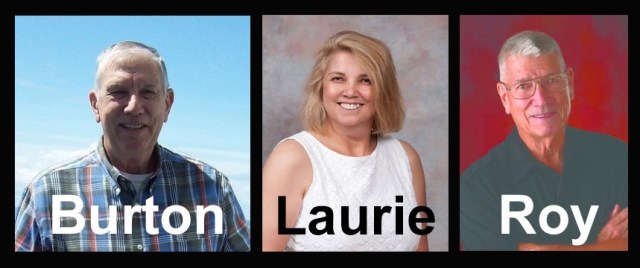
This is the third and final flash fiction story in a series by Burton Voss, Roy Voss & Laurie Voss Barthlow. They’ve been having lots of fun practicing their writing skills by taking turns beginning a short story, sending it on to the next person to add to it and finally the third person to wrap it up! We’ve enjoyed their stories and thank them for sharing with us! We wish them happy writing and much success in the future!

Snoopys-Dark-and-Stormy-Night-Second-Line

The Dark & Stormy Night

It was a dark and stormy night, apropos of the storybook cliché, and I was working later than my usual late hour in the small-town law firm where I am the junior partner. I hate working by myself—especially at night—but I had city lawyers on the phone, relentlessly re-working a closing agreement for a big-box store to be built at the edge of town. As I banged out multiple revisions for our client’s side of the deal, Mother Nature finally intervened and the power went out.

I was spooked and quickly gathered my things by the light of my cell phone before plunging into the downpour. I only took a moment to shiver in my seat before my vintage Mustang sputtered out of the empty parking lot. The power was apparently out throughout town, but I could see flashing red lights out on the main highway, and I could hear sirens. Assuming there had been a wreck, I decided to drive home to my cats through the old neighborhood.

Unlike many of my classmates, I came back to my hometown after college and chose to stay. I make a decent living here, where I was raised, and now, approaching middle age, I’m no longer embarrassed to admit I love it. I enjoy driving past the houses where I lived over the years, particularly the one in the quaint little neighborhood where I grew up.

On this night, however, there wasn’t much to see as I drove slowly through the flooded streets in the pitch black, but my headlights landed on a vehicle parked in front of my childhood home. I pulled up behind it and idled as I stared at the license plate on the 1967 Impala. Before my mind could reconcile my parents’ old car sitting in front of their former house, I was startled by a rap on my driver’s window. I inched the window down and said, “Hello?”

A man’s voice asked, “Are you going to come in?”

“No, I’m just passing through,” I answered with a stammer, before nervously blabbering, “I used to live here, and sometimes I drive home this way.”

“Have you been drinking?”

I felt relieved as it occurred to me perhaps the man was a police officer, so I inched the window down further; still could not clearly see him even though it was no longer raining. “No sir! I just left my office. It looked like there was a wreck on the highway, so I decided to take the back-way home.”

The porch light flared on, brightly illuminating the house and yard. My ears roared as my heart pounded, and I felt completely disoriented. The place looked just as it did when I was growing up. The front door opened, and a young woman stepped out. She was my mother, but my mother as she appeared when I was a teenager. The man outside my window spoke again, “She’s been worried sick.” I looked up at the face I could now clearly recognize. I stared in disbelief at the decades-earlier version of my father who curtly said, “Please park the car and come in the house.”

My mind was a blur of confusion as I sat frozen, unable to move—unable to speak. Was this some kind of a prank? Am I dreaming?

“You better get in the house, son. Your mother needs to talk to you.”

Slowly, my body regained a small amount of control, but now I didn’t know if I should comply with this person’s wish or just flee. I have always been the curious type, so I chose the former. “Yes sir,” I murmured while wondering if someone was videoing all this. What the heck. I’d play along.

My dad went through the gate and onto the porch where my mother, wringing her hands, stood waiting. Dad put his arm around her. They watched in silence as I approached. Nailed next to the door was the family name I had burned into a plaque for an eighth-grade woodshop project: The Barrows.

When I stepped up on the porch, my mother rushed and nearly smothered me in a long, hard hug. She kissed my cheek as she released me. If this was a dream, it came with sensations of touch and smell. The unmistaken aroma of her White Shoulders Eau De Cologne spurred a flurry of memories which made me dizzy.

She held my shoulders and looked into my eyes. This is real, I thought. There was no mistaking her beautiful green eyes with the little black birth mark that resembled a map of California in the right sclera.

“Oh, thank God. You’re safe.”

I made another quick look around. Nothing seemed amiss, but how could this be? She gave me another quick hug and said, “Come in. I’ll make some hot chocolate.”

Safe? Safe from what?

“I’ll check the Mustang and move it behind the house,” my dad said.

I followed my mother into the kitchen. Nothing had changed. There was a calendar on the wall, but I couldn’t make out the year from my place at the table, and I felt it might seem rude or at least strange if I asked. I decided to let it play out. Whatever was going on here had to be significant, and now my intrigue had me locked in to whatever was coming.

I had a cup of steaming chocolate in my hand by the time Dad came in the back door. He was chewing his bottom lip like he did when he was concentrating on whittling out my pinewood derby car for Cub Scouts. Mom kept wiping her hands on her apron. They got to me.

“What’s going on?”

They exchanged glances and Dad gulped. “Clyde, I hope you won’t judge us too harshly, but we gave in to temptation in a moment of weakness.”

This was going to be rich. My parents were as dull and predictable as a stop light. What did he do, try to eat two marshmallows at once?

“While cleaning over the last several months, your mom realized a couple of tellers were going to rob the bank. She kept on working later and later, snooping around until she found out their entire plan.”

“Mom did? Come on!”

Mom hung her head, bunching her apron and ironing it flat with her hands.

“She found out all about it and we initially planned on alerting the police.”

It was Dad’s turn to stare at his toes.

“You mean you didn’t? What did you do?” I was home again, but Mom and Dad sounded like real people, not infallible parents.

Dad’s shoulders dropped. “We let ‘em steal it.” He sighed. “Your mom knew where they were going to hide the money. We know how much you want to go to law school, and to tell you the truth, we couldn’t afford it.”

He straightened up and faced me. “We stole it from their hiding place, but by then the cops were looking high and low for the crooks. They broke the tellers, and it turns out they stole it because one of them owes a lot of money to a mean loan shark.”

Mom’s hands were almost a blur and she whimpered a little.

Dad continued, “We think we’re safe. The tellers have now gone to jail and our name never came up.”

Dad rocked from one foot to the other. “It was a lot of money, Clyde. We were scared and had to dispose of almost all of it in order to avoid suspicion. We bought a huge tract of land outside of city limits through an out-of-town realtor and under a phony corporation name.”

Mom spoke into the confession. “It’ll be years, if ever, before the town grows large enough that anyone’ll be interested in that area. Of course, when they do, we’ll be legitimately rich.” She tried to laugh, but cried instead.

I focused my eyes over the dash of the Mustang from my parking space outside the office. Street lights were shining again and the building was well lit, cozy and inviting. Okay then, I’ll return to my desk and make those big city lawyers back down. No one was going to take advantage of my clients, The Barr Corporation, now that I had an inkling of who owned them.

Voss Trio

About Laurie:

Laurie is a native Arizonan and Kingmanite. She is a proud UA alum, and is presently working her 20th year as area manager for Chicago Title in Mohave and La Paz Counties. She has started writing for fun, and aspires to be as renowned as the Voss Bros! Laurie has two hooligan daughters, Allie and Katie, and all three live in Kingman, AZ. You may reach Laurie at laurie.barthlow@gmail.com, or find her on Facebook @ https://www.facebook.com/laurie.vossbarthlow

About Burton:

Burton Voss is a retiree in Sun City West, AZ. This publisher has grown found of him and refers to his as, “the wise man of the mountain!” He is a member of American Christian Fiction Writers & Christian Writers of the West. Hones his writing craft through a critique group sponsored by Gifts to Go in Surprise AZ & the writers group sponsored by Sun City West Library. With a historical fiction manuscript waiting for rewrite, he is currently working on a speculative fiction manuscript. Burton blogs @ http://www.burtonvoss.com/ & find him on facebook @ https://www.facebook.com/burton.voss

Burton’s stories published by Little CAB Press: Not My Will… a Christmas Story in Christmas Story Collection Vol I & The Trike Ride in A Time To Blossom

About Roy:

Roy Voss retired from a career of designing & building high pressure pipelines. The work took him to 5 continents and once in a 30 day period, resulted in 2 trips around the world- 1 going east & the other west. What was once an obsession with golf, has morphed into a love of writing. In addition to the self published novel PAYBACK, Roy has completed 6 other novel length manuscripts based on incidents from his travels. He now lives with his wife Bobbi, near his brother Burton in Sun City West! Find Roy @ Happily Retired Roy

Roy’s stories published by Little CAB Press: The Hualapai and The Obit in A Time To Blossom & The Navatec Connection (first three chapters of the novel) in Adventures in Fiction 

We hope to hear more from these fun authors soon!

Promote yourself by submitting Flash Fiction to Little CAB Press

HAPPY WRITING!

Posted in Flash Fiction | Tagged , , | 4 Comments

Drive Safe—Live Safe—Inspire Others!!!

From the editor: Obviously, we aren’t looking to make Little CAB Press, the company or the blog, a political spring board; but the following article isn’t about politics. It’s about potentially fatal behavior, tragic loss of life and holding our elected officials’ feet to the fire.

The following article by Marcy Perry, appeared in the Mesa section of the Arizona Republic on August 16, 2017.

34 years ago, Marcy’s 16-year-old son was killed by a drunk driver as their family rode in the family car to an outing one evening. Marcy’s son was thrown from the car after the drunk driver struck them and her son died in her arms.

Her words below serve as a reminder of our responsibility to drive safely every single time we get behind the wheel and our moral obligation to set better examples for our children and fellow citizens.

August 16, 2017 — My Turn by Marcy Perry — Arizona Republic

I am absolutely appalled at the actions, reactions and non-actions of Mesa City Council and [a certain councilman].  I have been following this saga of excuses, but it wasn’t until today that the significant date slapped me in the face!

May 7, 2017, my son, Robert Leon Perry, AKA Bucko, would have been 50 years old.  Notice the past tense.  Bucko is forever 16 because on June 25, 1983, we were hit by a drunk driver and I held Bucko when he took his last breath.  It was an innocent family outing—we were on our way to the drive-in theater on Recker and Main, 6 miles from home.  Details don’t matter at this time.

What matters now are the cavalier attitudes of a drunken councilman who obviously has no concern for his or his wife’s well-being and, least of all, the lives of innocent people not knowing a selfish drunk is out there playing bumper cars!

After 34 years of trying to change the public attitude about drinking and driving, we have a public figure who has missed the stories of loss and injuries and PSAs about consequences.  WAIT—he’s above punishment because he’s an elected official.  I guess that gives him special dispensation to break the law and run free or make up his own punishment. It was my understanding that 2 DUIs in a 5-year time frame meant a mandatory sentence of 1-3 years in prison.  I guess that’s for us mere mortals, not those who claim to represent us and our values.

Things have changed—now we don’t only have to be concerned about DUI, but drugged and distracted driving and wrong way drivers!  When are people going to realize that driving is a privilege not a right?  When do we stop giving elected officials a blank check for their behavior and expect them to be role models for the community?

I understand innocent until proven guilty, however, [the councilman] was quite obviously drunk and disorderly.  If I had been involved in this kind of disgraceful activity, I would have been fired from my position at the school. After all, how could I expect the students to respect me when I had so little respect for myself?  Also, this isn’t the first time he has flaunted the law.  It’s time for tough love—dismissed from his position; sincere, heartfelt apologies to the people who trusted him with their vote; public speaking for groups like MADD (Mothers Against Drunk Drivers) suspended drivers license and some REAL prison time.  This may sound harsh, but it’s not as harsh as holding your son when he dies.

Every time I read or hear about lives being taken by drunk/impaired/distracted drivers, my heart breaks for the families involved.  I have told my story to school assemblies, convicted drivers at MADD, church groups and anyone who might listen.  Police officers put in extra hours and miss out on family holiday celebrations trying to prevent drivers from hurting, maiming or killing others. The radio and TV stations saturate the airways with PSAs for free rides home, etc.  What good does it do when someone like [the councilman] acts like his actions are his business and not that serious? What will it take?  It’s been 34 years.  I’ll never know if Bucko would have accomplished his goals, what kind of man/father he would have been.  His future was taken away from him and his family by a selfish drunk who didn’t care about anyone but himself. — End article —

The above gives us so many things to think about: vote for those of high integrity, hold our elected officials to the same laws and standards we live by, and set the example!

In 2015 10,265 people in the U.S. were killed in alcohol related and under the influence accidents. An additional 3,477 were killed in accidents related to distracted drivers. That’s a total of 13,742! And that’s too many folks!!!

Drive Safe—Live Safe—Inspire Others!!!

DO NOT DRIVE UNDER THE INFLUENCE

PUT YOUR PHONE DOWN

DON’T EAT, SHAVE, PUT ON MAKEUP OR OTHERWISE DRIVE DISTRACTEDLY

OBEY ALL TRAFFIC SIGNALS & SIGNS, ESPECIALLY THE WRONG WAY SIGNS

Posted in CAB Press | Tagged , , , | Leave a comment

The Quest West- a comedic bit of Flash Fiction!

This comedic bit of flash fiction is better than a cup of java to give you a boost over this hump day!

Your mission: Tell us how the native youth Water Nose got his name & why he has such difficulty crawling through the tall grass.

The Quest West

Act I by Burton Voss

Act II by Kim Pattillo & Laurie Voss Barthlow

Act III by Roy Voss


Water Nose was courageous. No one denied it. It was just that the prairie gods hated him. They could stop him from becoming a man of The People if that’s what they chose. Who could fight them?


To become a man of The People, fledgling warriors had to count coup on a buffalo: creep up and touch it. The task was an undeniable display of bravery coupled with skill in stalking.

Water Nose was willing to kiss a buffalo if that’s what it took. He could picture himself swinging astride one and using it as a warhorse. The trouble was the odious prairie gods. Whenever Water Nose crawled through the grass, the hateful deities sent unseen spirit ants, spiders, and scorpions to bite and sting him. Red, itchy blotches appeared all over his body, his nose and eyes watered, and he sneezed.


Water Nose was scared. For the last three sleeps he had stayed in a prayer lodge fasting and honoring the prairie gods in hopes they would let him touch a buffalo without sending their plagues to torment him. Now it was time to call on old Woman Who Sees Tomorrow to find out if the gods had been appeased.


“No,” she said. “You will never crawl through their grass and touch a buffalo. You will bring shame to your father if you try and fail.”

“What can I do, then?”

“Go to the tall country of the setting sun. Maybe you’ll live. Some people there are friendly, some are not.”

“If I go before testing day it will look like I’m afraid.”

“You are.”

“But not of a buffalo.”

“No. Not of a buffalo.”


Four days before testing day when the sky was still speckled with campfires of The Old People Gone Before, old Woman Who Sees Tomorrow smiled at the hubbub growing in camp. Knowing what she’d see, she went out to look anyway.


A mid-sized buffalo, a fresh offering with only one skillfully placed arrow piercing its hide, rested outside the tepee of Water Nose’s father.

Water Nose could not be found.


It was pretty obvious to all, that Water Nose had taken off to find his buffalo. The people wished him well and continued on with their daily lives.


Meanwhile, Water Nose was looking high and low for a buffalo to count coup on. He traveled the Great Plains in search of the buffalo herds. They were nowhere to be found. He kept heading West.

Water Nose encountered many tribes along the way. He stayed with the Sioux for a period of time. Chief Kills In Water wanted him to marry his eldest daughter. He left in the middle of the night to avoid this entanglement.

His travels took him south to the land of the Dine’ or Navajo as they are called by the Anglos. He stayed with them for a time. He also encountered the Hopi who treated him as a god because he was left handed, a rarity among the tribes. He was adopted into the Kachina society and participated in their ceremonial dances as the Left Hand Kachina. He stayed among the Hopi and Navajo for several months. He finally decided to leave after determining that they too had not seen the buffalo in two generations.


Water Nose took off and headed west again.  Here he encountered the Mohave. They were huge people and who were very superstitious and warlike. They thought he was cursed because he was left handed. He was held captive, tattooed and treated as a slave.


After escaping the Mohave, he continued on his path. He came to a great hole in the ground known to the people as the West End. It belonged to the Hualapai and Havasupai tribes. Again, he asked about the buffalo. No one had seen buffalo, but they had a very stubborn animal that they offered to let him count coup on called a burro.

“What a strange animal. Where did it come from, Mud-on-the-Face?” Water Nose wanted to know. It was like nothing he had ever seen.

The scarred Hualapai warrior answered. “Men with white faces brought them. At first, we thought these strange people were a two-headed creature with four legs, but it was that they rode an animal larger than this burro and with shorter ears. This creature they call horse. It could carry them all day and run very fast with a heavy load.”

Water Nose looked skeptical.

“There is more,” Mud-on-the Face said. “They have a stick that can shoot fire and kill at a great distance.”

“I may be from the plains, but I think I know when one pours sand in my broth.”

“It is real. You can see for yourself. Some remain in the south. Go there and you will see.”


Water Nose continued his quest but now more out of curiosity than a desire to count coup. After many days, he came to the land of the Pima. They were friendly and welcomed him. Their language was far different from any he had heard, and communication was difficult, but their sign language was similar to his. He quickly picked up enough to speak with them and ask them to take him to the people with the horses.


After more than a year, Water Nose returned to The People. A cry of panic ran through his village when he reined the chestnut gelding up on the hill above the camp. Women and children fled. The warriors formed a defensive line—bows and lances at the ready. Water Nose stood still as a statue. The horse finally pawed the ground, and the warriors cringed.

“I am Water Nose,” he shouted. “I come to claim my place as a man of The People.”

He watched as the warriors became uncertain and restless.

“Hear me,” he yelled. “I have great power. I can run faster than the buffalo and kill at a far distance. He let out a warrior’s whoop and spurred the gelding into a gallop. After twice around the camp, he reined to a halt in front of the chief.

“I have returned to The People to stay.”

“You are not a man. You cannot stay among us,” shouted Antelope Horn. “I brought meat to your father, our chief, when you could not. I am the warrior chief now. I say you go.”

“And I say that you still pee in your moccasins,” Water Nose countered.

The enraged Antelope Horn raised his bow and fired an arrow. It hit Water Nose in the chest. Center of mass. Heart and lungs like they all were taught. But the flint point shattered against the Spanish armor beneath Water Nose’s shirt and the arrow bounced harmlessly away. He raised his strange weapon and pulled the trigger. Fire, smoke, and shot belched out, and the buzzard that had perched on the limb of a cottonwood tree fell dead. Brave warriors dropped to the ground in fright.

“From this day on, I will be called Buzzard Killer,” Water Nose announced. “I know many ways of the white man now. I will teach you.”


The stretch body Cadillac Escalade pulled into the lot at the Baskin-Robins. Ed Water unbuckled his seat belt and turned around. He looked over the heads of his two wide-eyed grandsons still strapped into their booster seats and smiled at the packed parking lot across the street at the Lone Horse Casino where he was CEO.

Then he turned his smile to the boys. “And that, kids, is how I became the greatest war chief our tribe has ever known. Now, who wants ice cream?”

***

Burton Voss blogs at Writing Fiction and is a regular contributor to Little CAB Press projects
Kim Pattillo studied Native American Culture at NAU
Laurie Voss Barthlow is Burton Voss’s talented & creative daughter
Roy Voss is the author of Payback and many other novels and short stories and is also a regular contributor to Little Cab Press!
Posted in Flash Fiction | Tagged , , , , | Leave a comment